QUANDO EU NASCI JÁ TINHA CALOR
Lady Letal + Xyk






EXPOSICOES
o que ja passou por aqui
Quando eu nasci já tinha calor
Energia transferida entre corpos, o calor sempre esteve aqui. Sabia disso Itamar Assumpção quando escreveu “Já deu pra sentir”. O calor inicia antes de todo o resto: a flor, terror, glamour, ou mesmo antes das cidades ou das águas do Amazonas. Fosse na origem da vida, em meio as águas quase borbulhantes dos oceanos primordiais, ou na manutenção dela por milhões de anos à frente, sempre o conhecemos. Essa energia, porém, existe no fluxo, no contato e na transferência. Como no toque e na fricção de corpos próximos, xyk e Lady Letal estão trocando calor.
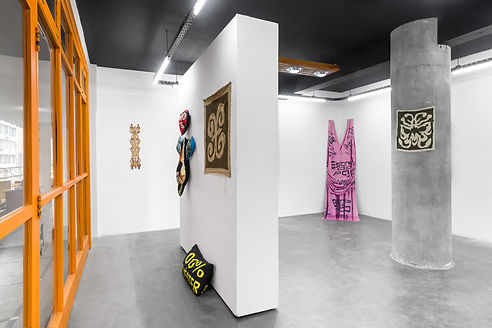
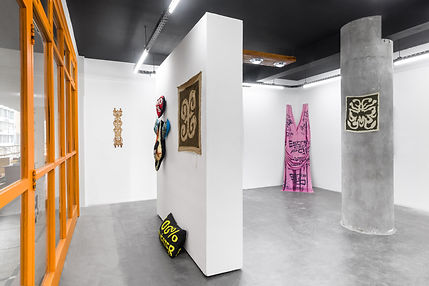
Os seres de xyk estão próximos dos 100ºC. Ora bicho, ora gente, criaturas híbridas e agêneras parecem surgir de seu mar particular que é o caldeirão onde a artista mistura ingredientes coletados pela cidade. Suas pinturas exploram uma fauna e flora particular, vestígios do ambiente natural que a circundava em Campo Grande, mas também inventa uma vida microscópica. Contornos humanoides com garras fazem seu caminho para fora do mar e perambulam por um ambiente novo, descobrem territórios e paisagens que parecem ser uma outra Terra, anterior ou posterior a esta que habitamos, de figuras que poderiam tanto ser resquícios de um passado mitológico, quanto fruto de um futuro distante.
Desse caldeirão, que a artista manuseia como para resultar uma poção, surgem também as cores com as quais ela tinge seus tecidos. Cascas de frutas, vegetais, árvores e folhas são as matérias das quais o calor extrai o pigmento. Com a água aquecendo e se aproximando da ebulição, as cores se fixam principalmente em tecidos de fibras naturais, de origem vegetal ou animal, como algodão, lã ou seda. Da cidade, a artista também coleta materiais industriais e grades de ferro trabalhados, gravados no tecido a partir do tie-dye. Da coleta ao preparo, do tingimento à secagem, o calor latente evoca um ritual que se desenrola em pequenas ações até a ebulição.
A temperatura aumenta, e quase trinta anos depois, Teto Preto nos relembra com a música de Itamar que o calor já existia e que resiste na cena das festas de São Paulo, criando lugares de identificação e acolhimento em uma cidade que viola corpos dissidentes. Nesses territórios celebra-se o calor. Vários corpos que se mostram e se montam entre tecidos sintéticos dançam juntos em atrito, um lugar onde o suor é mais desejado.
É por esse cenário que Lady Letal trafega. No real, captura das centralidades da capital paulista um repertório de imagens cotidianas e domésticas, mas também por essa mesma cena noturna da cidade. No virtual, está entre memes das redes sociais e lugares menos óbvios do antigo Twitter. Nesse transito, seus trabalhos esfumaçam as silhuetas já não tão claras entre estes dois ambientes, dando corpo àquilo que não possui matéria e manipulando imagens que circulam como vocabulário visual na internet, um possível equivalente imagético do pajubá. Suas performances incorporam a velocidade das tendências da internet, a mesma velocidade com que o artista alcança altas temperaturas.
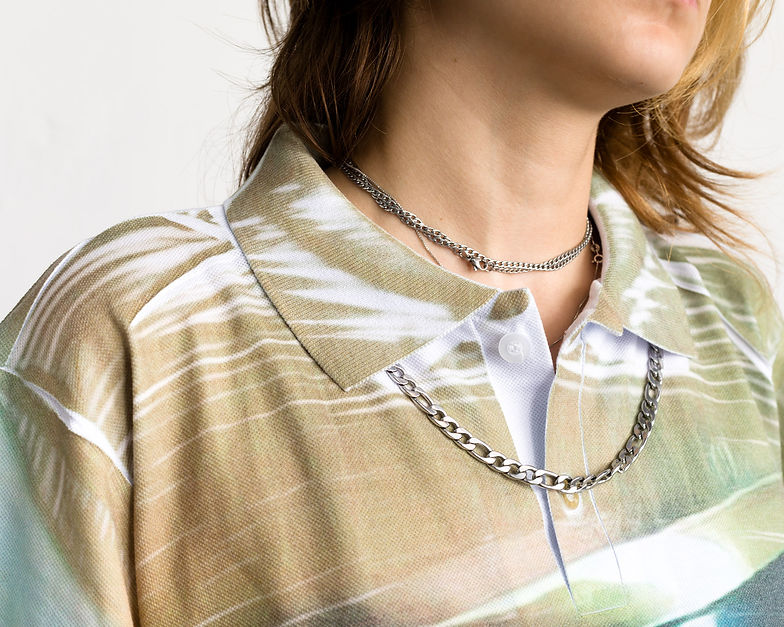
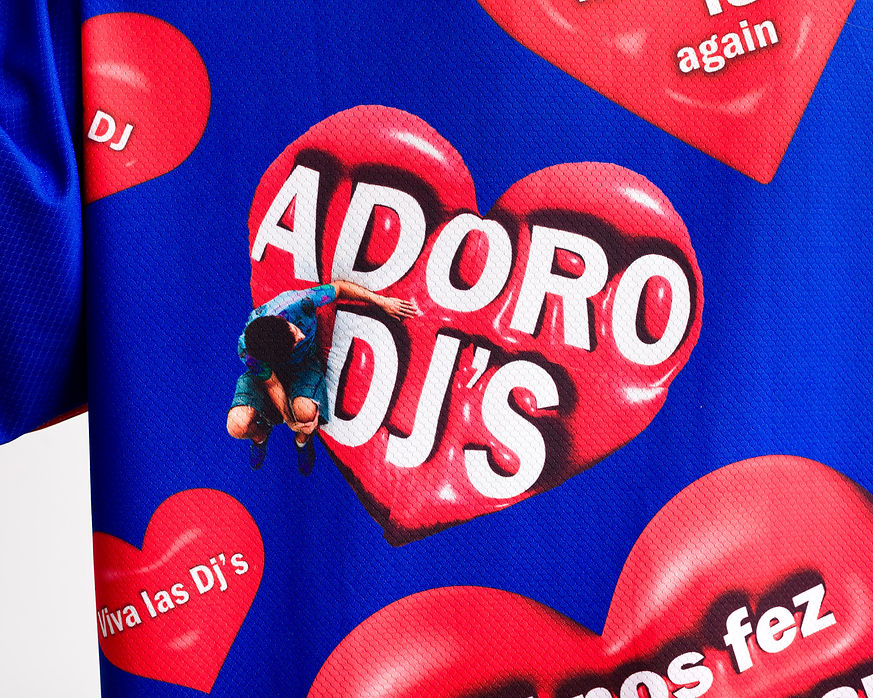
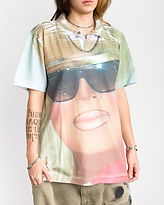
Principal suporte, o tecido é presente desde sua infância nos anos 1990. As estampas são aplicadas em tecidos sintéticos, como poliéster, dry fit e poliamida, através de uma técnica industrial. Lady Letal aquece a prensa a 200º e aquilo que existia no horizonte infinito da internet é rapidamente transposto para o real. A sublimação faz aquecer o pigmento sólido de modo tão rápido que se torna etéreo, gás, antes de impregnar o tecido. No meio de noites quentes, conduzidas por DJs que fazem apaixonar, os tecidos fazem transpirar e os corpos consagram o calor.
Os artistas estão em temperaturas diferentes e por isso dançam. Em um primeiro encontro que se inicia aqui, estão longe do equilíbrio neutralizante. Vivemos os instantes de uma troca de calor ideal, em que seus corpos, seus movimentos, seus trânsitos fazem seus trabalhos transpirarem. A exposição propõe lembrarmos do que aquece, seja no início da vida ou na celebração diária dela, o calor sempre esteve aqui, mesmo antes de nascermos. Xyk e Lady Letal continuam a nos lembrar disso e querem que você sinta e faça parte dessa troca de calor. Que cada um que chegue com sua temperatura, desestabilize, que se deixe aquecer por essa exposição e possa distribuir seu calor para outros corpos. Dance, dance, dance, dance.
Victor Constantino
@vikferraz
When I Was Born, Heat Was Already Here
Heat, the energy transferred between bodies, has always been here. Itamar Assumpção knew this when he wrote Já Deu Pra Sentir ("You Can Already Feel It"). Heat comes before everything else: before flowers, terror, glamour, even before cities or the waters of the Amazon. Whether at the origin of life, amid the nearly boiling waters of the primordial oceans, or in sustaining life for millions of years thereafter, we have always known it. Yet this energy exists only through flow, contact, and transfer. Like the touch and friction of bodies in close proximity, xyk and Lady Letal are exchanging heat.
xyk's beings exist at nearly 100°C. At times animal, at times human, these hybrid, agender creatures seem to emerge from the artist's own sea: the cauldron in which she combines ingredients gathered throughout the city. Her paintings explore a singular fauna and flora, traces of the natural environment that surrounded her in Campo Grande, while also inventing a microscopic form of life. Humanoid figures with claws make their way out of the sea, wandering through a new environment, discovering territories and landscapes that seem to belong to another Earth—one that came before or will come after the one we inhabit. These figures could just as easily be remnants of a mythological past as inhabitants of a distant future.
From this cauldron, handled by the artist as though brewing a potion, also emerge the colors with which she dyes her fabrics. Fruit peels, vegetables, tree bark, and leaves become the raw materials from which heat extracts pigment. As the water heats and approaches its boiling point, the colors bind primarily to natural fibers of plant or animal origin, such as cotton, wool, or silk. From the city, the artist also gathers industrial materials and worked iron grates, whose patterns are transferred onto fabric through tie-dye processes. From collecting to preparation, from dyeing to drying, latent heat evokes a ritual unfolding through a sequence of small actions until everything reaches a boil.
The temperature rises, and nearly thirty years later, Teto Preto reminds us through Itamar's song that heat was already here—and that it endures within São Paulo's nightlife, creating spaces of belonging and refuge in a city that violates dissident bodies. Within these territories, heat is celebrated. Bodies adorned in synthetic fabrics dance together in friction, in a place where sweat becomes something to be desired.
It is through this landscape that Lady Letal moves. In the physical world, she gathers images from the everyday and domestic life of downtown São Paulo, as well as from the city's nightlife. Online, she navigates between social media memes and the less obvious corners of what was once Twitter. Moving between these worlds, her work blurs the increasingly unstable boundaries between them, giving material form to what has no physical substance and manipulating images that circulate as a kind of visual vocabulary on the internet—a possible visual equivalent of pajubá. Her performances embody the speed of internet trends, the very same speed with which the artist reaches high temperatures.
Fabric, her primary medium, has been present since her childhood in the 1990s. Her prints are transferred onto synthetic textiles—polyester, dry-fit, and polyamide—through an industrial process. Lady Letal heats the press to 200°C, and what once existed within the boundless horizon of the internet is swiftly brought into the physical world. Sublimation heats solid pigment so rapidly that it becomes ethereal, turning into gas before permeating the fabric. In the midst of hot nights, guided by DJs who make us fall in love, the fabrics make us perspire, and bodies consecrate heat.
The artists exist at different temperatures, and that is why they dance. In this first encounter, which begins here, they remain far from the neutralizing balance of equilibrium. We witness the moment of an ideal exchange of heat, in which their bodies, movements, and trajectories cause their works to perspire. The exhibition invites us to remember what warms us. Whether at the beginning of life or in its daily celebration, heat has always been here—even before we were born. xyk and Lady Letal continue to remind us of this and invite you to feel, and become part of, this exchange of heat. May everyone arrive with their own temperature, unsettle the balance, allow themselves to be warmed by this exhibition, and then carry that warmth to other bodies. Dance, dance, dance, dance.
Victor Constantino
@vikferraz